IUCN Guidelines for Amphibian Reintroductions and other Conservation Translocations IUCN Guidelines for amphibian reintroductions and other conservation translocations First edition Edited by Luke
The information in these Best Practice Guidelines have come from a variety of sources including an extensive literature review, the experience of the authors, and direct observations of Leptodactylus
Manual para el control de enfermedades infecciosas en colonias de resguardo para anfibios y programas de reintroducción Manual para el control de enfermedades infecciosas en colonias de resguardo
These guidelines are produced based on information provided by managers of amphibian captive breeding programmes in Latin America, Africa, and Asia, along with input from experts at Durrell Wildlife
Husbandry Manual for the Panamanian Golden Frog Atelopus zeteki Husbandry Manual Panamanian Golden Frog Atelopus zeteki Second Edition by Vicky Poole, National Aquarium in Baltimore BACKGROUND
The 2024 ACAP provides the most up-to-date evidence on threats and approaches to amphibian conservation, and from there identify gaps and priorities that can then be disseminated and adopted by
The Amphibian Conservation Action Plan (ACAP), the first taxonomic class-level plan of its kind, was first published in 2007 and then updated as a digital resource in 2015, moving to an online
Ensuring a Future for South African Frogs: A Strategy for Conservation Research SANBI Biodiversity Series 19 Ensuring a future for South Africa’s frogs: a strategy for conservation research G.J.
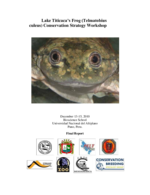
Lake Titicaca’s frog is the world’s largest of all aquatic frogs. It is endemic to this lake, which is shared by Peru and Bolivia. On the Peruvian side, frogs are harvested and transported to markets