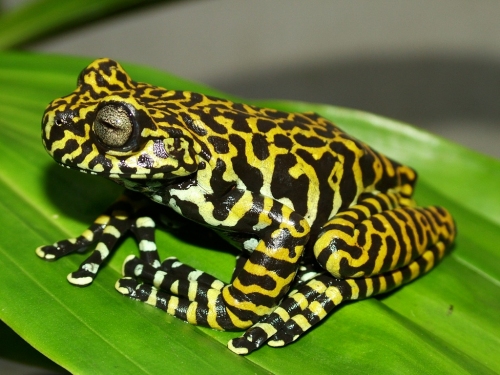
Frogs and toads from south-western Colombia: Jewels of nature that our grandsons should know
Colombia has one of the highest amphibian diversity in the world, and South-Western Colombia (with nearly 290 amphibian species) contributes to 40% of this diversity. However, in spite of this high diversity, the conservation efforts toward this imperilled group are very scarce.
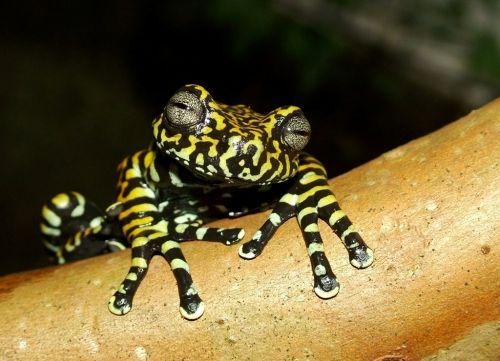
2010 Grantee: Jonh Jairo Mueses-Cisneros
Since 2004, we have worked successfully on in situ conservation projects in the region, focusing on species of special concern. At the moment, we consider that our efforts should be directed towards the implementation of responsible ex situ conservation programs for amphibians, accompanied by a detailed environmental education plan involving local people and the construction of legal policies to guarantee the survival of these species and their habitat.
We have prioritized forty-five species from south-western Colombia that require immediate ex situ conservation actions (most of these species were not prioritized for the Amphibian Ark and other Colombian institutions in 2007, due to the lack of information at the time). To help save all of the forty-five species would require an ambitious, long-term, large-scale project. However, we have devised a scheme that would allow us to build facilities and have an operating program within two years in order to be able to start the breeding and reproduction phase for seven of these species.
The funds requested from AArk will be used in: 1. Training of two members of our team on amphibian husbandry techniques and the rearing of feeder insect colonies at internationally recognized ex situ institutions in Ecuador, (the only facilities currently housing amphibians that are phylogenetically similar to the ones targeted in our project). 2. Environmental education for local people and environmental authorities to improve the quality of existing amphibian habitats, and 3. Engaging in policy-making efforts to enact legal actions for these species and their habitats.